Child-Friendly? Truly Accessible?

The Question Cape Town’s Family Venues Need to Answer

Cape Town’s restaurants, wine farms and family destinations are increasingly marketing themselves as “child-friendly” and “accessible”.  Countless Facebook pages, Instagram and Tik-Tok accounts and tourism brochures share images of sprawling lawns, jungle gyms, splash pads and smiling children. Yet for many families, particularly those navigating the world with a pram, mobility aid, wheelchair, walker or older child with additional needs, “child-friendly” and “accessible” are not the same thing.


In fact, they are often worlds apart.


The challenge is that most establishments define child-friendliness from the perspective of the child alone:

  • Is there a play area?
  • Is there a kiddies’ menu?
  • Is there space to run around?

What is often overlooked is whether the adults accompanying those children can actually access those spaces.

The Accessibility Gap

play area and gravel parking
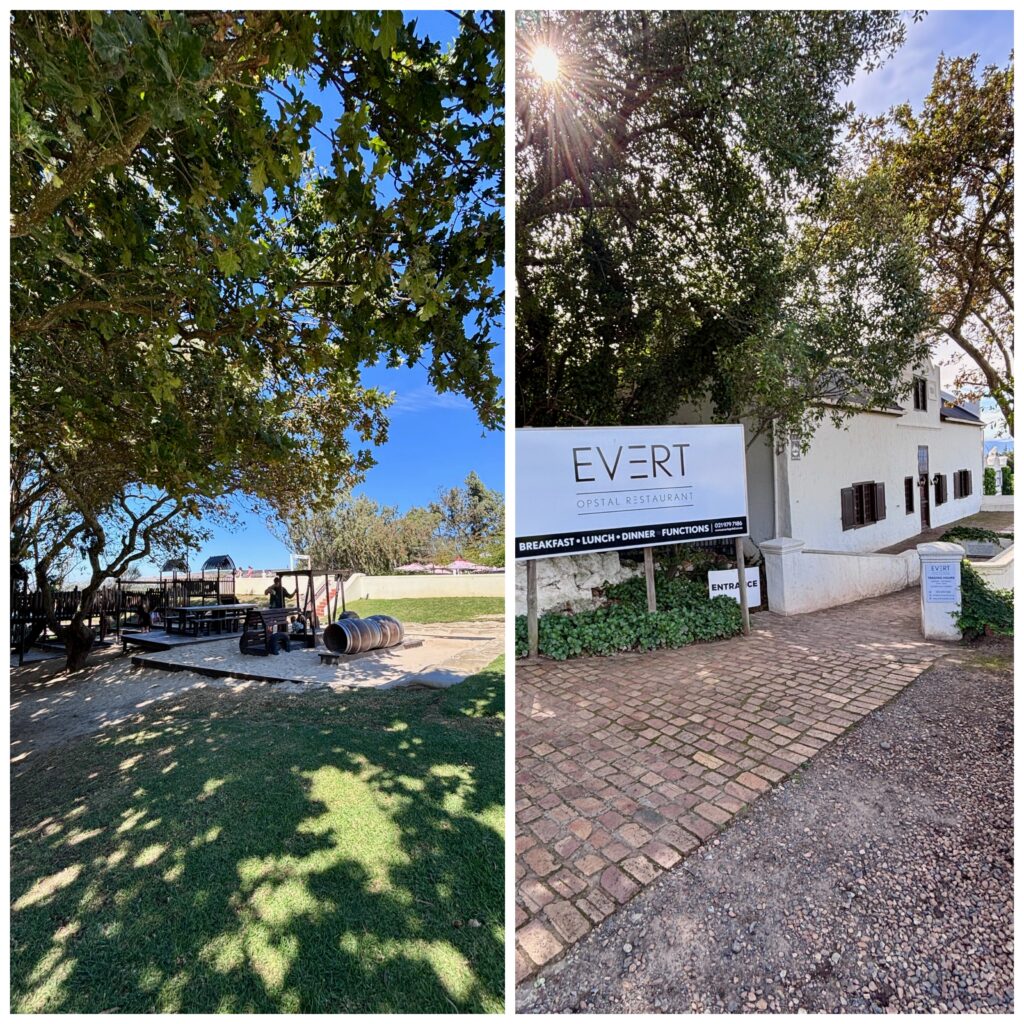
A play area on sandy soil, far removed from a parent seated with another baby in a pram and a gravel parking area have the potential to make things quite challenging, particularly if the parent is on their own - let's not even consider when they're accompanied by a grandparent in a wheelchair!

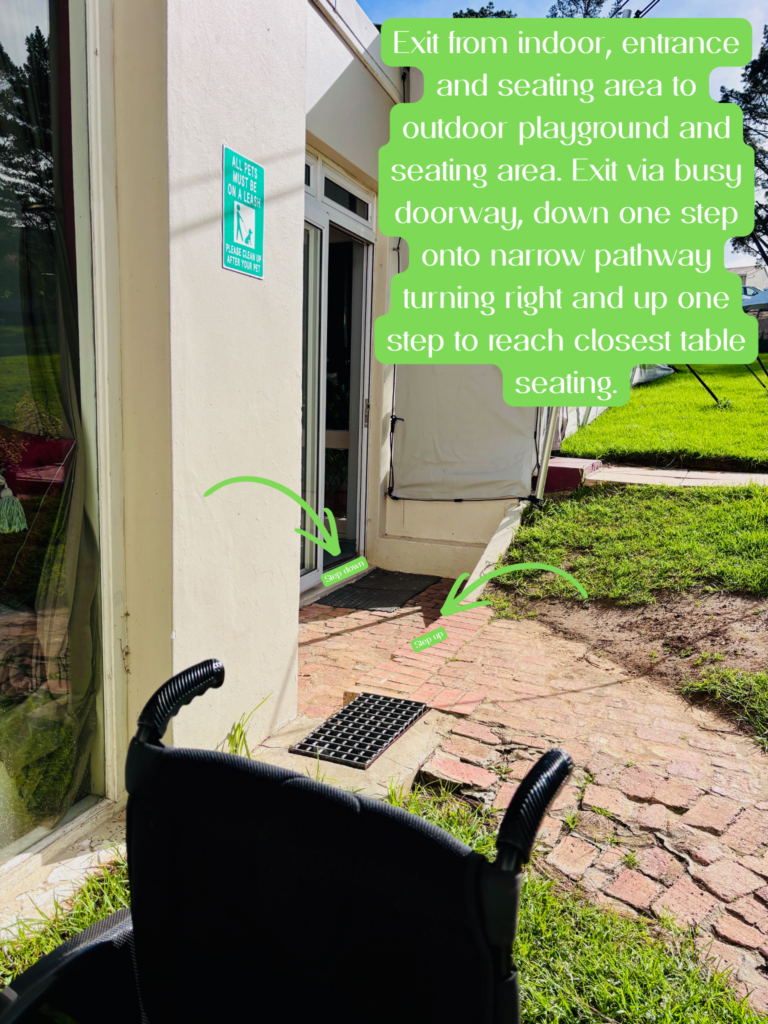
A restaurant may proudly advertise a play area, but if that play area can only be reached via gravel paths, steep slopes, uneven lawns or stairs, it immediately excludes many families.


Similarly, a wine farm may offer expansive picnic areas, yet fail to consider:

  • Whether a wheelchair can reach the picnic spot.
  • Whether a parent pushing a pram can navigate the terrain independently.
  • Whether pathways remain usable after rain.
  • Whether accessible bathrooms are available and functional.
  • Whether seating areas provide adequate circulation space.
  • Whether a caregiver can accompany a child into the play area.


True accessibility is not merely about reaching the restaurant entrance.


It is about being able to participate fully in the entire experience.

The Problem With "Wheelchair Friendly"

One of the most common frustrations expressed by wheelchair users is arriving at a venue that claims to be wheelchair friendly, only to discover unexpected barriers. Community discussions frequently highlight that venues often advertise accessibility while overlooking critical details such as accessible bathrooms, sufficient circulation space between tables, or step-free access throughout the property.


A single accessible parking bay or entrance ramp does not make an entire venue accessible.


Accessibility should be viewed as a continuous journey from arrival to departure.

Why Pram Accessibility Matters Too

Over the years, I have realized that –  interestingly – many of the challenges faced by wheelchair users are identical to those experienced by parents with prams. 


Consider a outing where a parent takes her older child, maybe a toddler or preschooler, and a baby in a pram to a restaurant or venue with a playground.  If the route to the play area involves loose gravel, deep sand, uneven cobblestones or steep inclines, participation (accessibility) becomes difficult or impossible.


Accessibility is therefore not solely a disability issue.

It is a family issue.


It affects grandparents, pregnant mothers, injured visitors, families with multiple young children and anyone whose mobility is temporarily or permanently limited.

What True Accessibility Looks Like

A genuinely family-friendly venue should consider:


Arrival

  • Designated accessible parking.
  • Clearly marked drop-off areas.
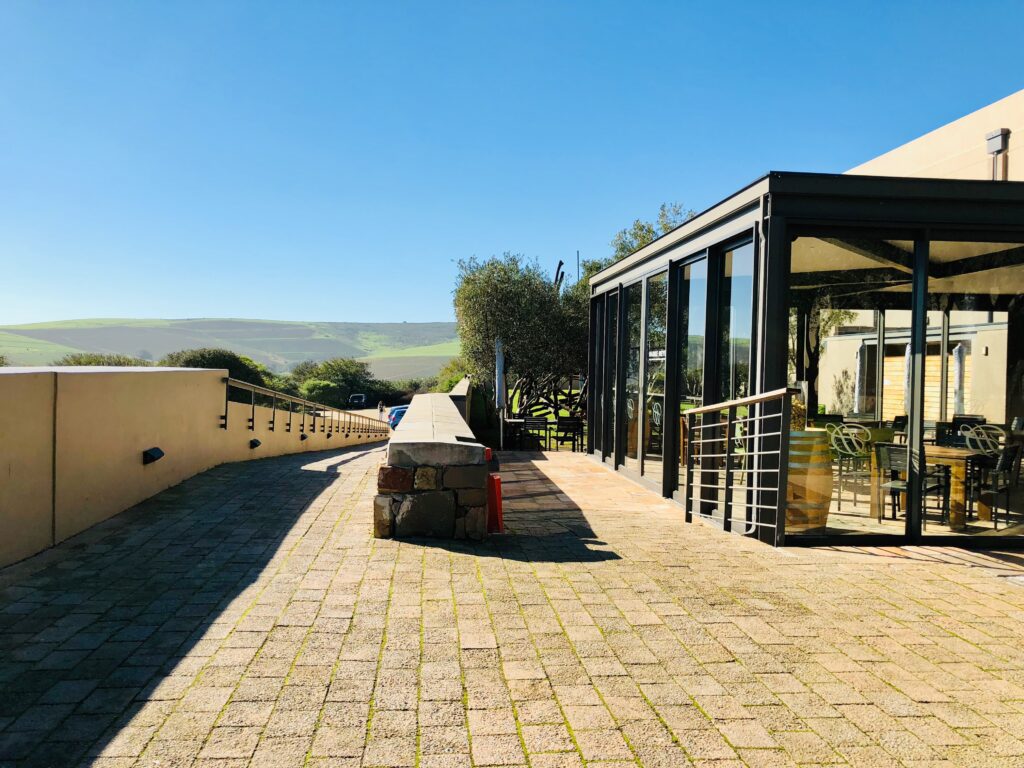
  • Smooth surfaces from parking to entrance.

Movement

  • Wide, obstacle-free pathways.
  • Firm, stable surfaces.
  • Step-free access wherever possible.
  • Accessible routes to play areas, tasting rooms and restaurants.

Seating

  • Flexible seating configurations.
  • Adequate space between tables.
  • Clear sightlines to children’s play areas.

Play Areas

  • Accessible routes into and around play zones.
  • Inclusive equipment suitable for children of varying abilities.
  • Seating nearby for caregivers with mobility challenges.

Amenities

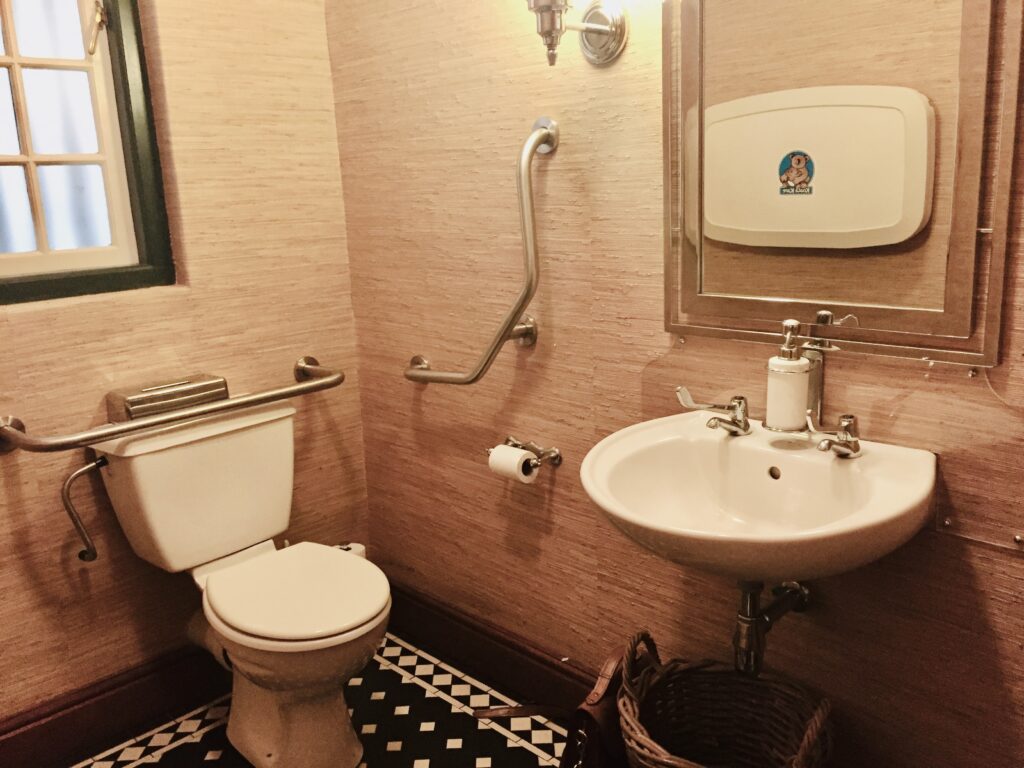
  • Accessible bathrooms.
  • Baby-changing facilities.
  • Family restrooms where possible.

Independence

Perhaps most importantly, accessibility should enable independence rather than requiring constant assistance.

The gold standard is not “someone can help you.”

The gold standard is “you can do it yourself.”

Wheelchair users and prams have quite the challenge to reach the outdoor play- and seating area at The Tables at Nitida independently. The outdoor, play area is located at the bottom of a fairly steep hill on sandy soil, making it near impossible for a grandparent with mobility challenges or someone in a wheelchair to partake in the outdoor excitement and play.
accessible toilet

The Wine Farm Dilemma

Cape Town’s wine regions are filled with establishments that actively promote themselves as family destinations. Many feature extensive lawns, dedicated play areas and children’s activities. Examples include venues such as Leopard’s Leap Family Vineyards, which offers lawns, a playground and bicycle facilities for children, and Benguela Cove Lagoon Wine Estate, which specifically states that it is wheelchair accessible while providing numerous children’s attractions.


Other establishments, such as Klein Roosboom, specifically mention both child-friendly facilities and wheelchair access.


Yet accessibility cannot be judged by marketing claims alone.


The real test lies in the lived experience:

  • Can a wheelchair user reach every advertised family attraction?
  • Can a parent with a double stroller move freely throughout the property?
  • Can a grandparent with limited mobility participate in the day rather than watch from a distance?

These are the questions that matter.

Beyond Compliance

Accessibility should not be viewed as a legal requirement, a checklist or a specialised niche concern.


It is fundamentally about hospitality.


When a venue is truly accessible, it sends a powerful message:

“You belong here.”


Not just the child.


Not just the able-bodied adult.


Everyone.

A New Way to Evaluate "Family-Friendly"

family outing

Perhaps it is time for families, bloggers, tourism organisations and hospitality businesses to move beyond the simple labels of “child-friendly” and “accessible”.


Instead, venues should be assessed according to a more meaningful standard:

Can every member of the family enjoy the experience with dignity, independence and ease?


Until that question becomes central to the conversation, many of Cape Town’s most celebrated family destinations will continue to be child-friendly and wheelchair accessible in name, while remaining inaccessible in practice.


And those are two very different things.

In this series, I will be exploring specific Cape Town restaurants, wine farms and family venues through the lens of true accessibility—examining not only what is advertised, but what families with prams, mobility challenges and wheelchairs actually experience on the ground.