
“Shouldn’t I know better?”
It’s a question I’ve asked myself more times than I’d like to admit.
After years of working in psychology, helping people navigate depression, anxiety and PTSD, I understand the theories. I know about cognitive distortions, catastrophising, resilience and coping strategies. I’ve spent countless hours encouraging others to challenge unhelpful thinking patterns.
So why is it that my own mind still has an annoying habit of expecting the worst?
You’d think I’d have graduated from that by now.
Apparently not.
And perhaps that’s exactly the point.
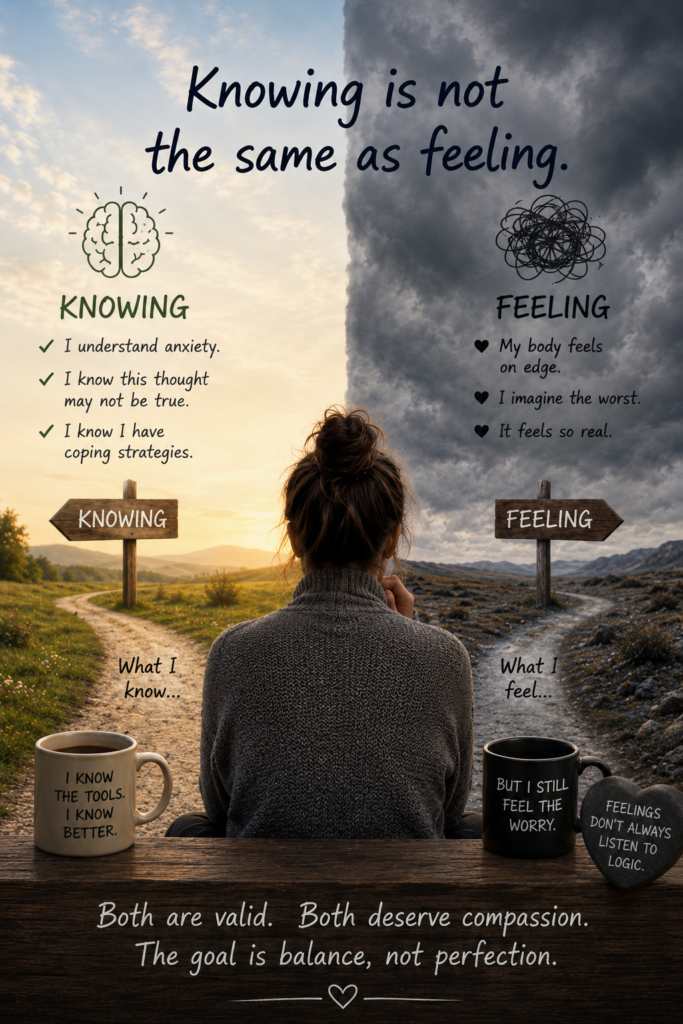
Knowing Isn't The Same As Feeling
One of the biggest misconceptions about psychology is that knowledge automatically changes emotions.
It doesn’t.
I know that my children are capable adults. I still worry.
I know my husband can solve most practical problems. I still imagine what could go wrong.
I know that not every unexpected email contains bad news. Yet somehow, my heart insists on bracing itself before I’ve even clicked “Open.”
If you’ve ever found yourself thinking, “I know this isn’t rational, but…”, welcome to the club.
There are more of us than you might think.
Maybe we're not negative...
Maybe we’re just highly trained problem spotters!
When I really stopped to think about it, I realised something…
Life has quietly trained me to look for problems before they become disasters.
- Living with a disability means planning ahead in ways many people never have to consider.
- Running a guesthouse means constantly anticipating what guests might need before they ask, spotting maintenance issues before they become emergencies, and preparing for the unexpected.
- Being a wife, a mother and now an actively involved ouma means carrying a mental checklist that rarely switches off.
Somewhere along the line, my brain became incredibly efficient at asking one particular question:
“What could go wrong?”
The trouble is, that question has an endless number of answers.
Gratitude and worry can live in the same heart
For a long time, I wondered whether my tendency to expect the worst meant I wasn’t grateful enough.
I have realized…it doesn’t.
I am deeply grateful.
- Grateful for my family.
- Grateful for our beautiful grandchildren.
- Grateful for good friends.
- Grateful that, despite life’s unexpected twists, I still get to travel, write, garden, laugh, host guests, enjoy a glass of wine around a braai and continue discovering what life at 58 has to offer.
And yet…
I still catch myself mentally rehearsing disasters that never arrive and, more importantly, I’ve come to realise that gratitude and anxiety aren’t opposites. You can wake up overwhelmed with appreciation for your blessings…and still spend the afternoon imagining every possible way things could unravel.
Those two things can coexist.
My brain thinks it's protecting me
This thought has changed everything for me.
What if those worst-case scenarios aren’t trying to frighten me? What if they’re actually trying to protect me?
Instead of asking myself,
“Why am I thinking this?”
I’ve started asking,
“What is this thought trying to protect me from?”
- Disappointment?
- Losing someone I love?
- Financial stress?
- Losing my independence?
- Letting someone down?
Suddenly, the thought isn’t an enemy.
It’s more of an overenthusiastic bodyguard. A bodyguard who sees danger everywhere.
Useful…but occasionally exhausting!
I'm learning not to argue with my brain
For years, I tried replacing negative thoughts with positive ones, but…my brain wasn’t buying it. These days, I’m trying something gentler.
When I notice myself predicting the worst, I simply remind myself: “That’s one possible outcome.” Not the outcome. Just one. Then I ask:
“What else is possible?”
Notice: I’m not pretending everything will be wonderful, because over the years life has taught me that isn’t realistic either.
I’m simply widening the possibilities.
Because if my imagination is capable of inventing catastrophes…surely it’s capable of imagining hope as well!
Evidence matters
One thing I’ve realised while writing my #58andlivingitup blogs is that my own story doesn’t support the narrative my anxious mind often creates.
Years ago, I was told I might never reach this stage of life.
Yet here I am.
- Travelling.
- Spoiling grandkids from time to time.
- Writing blogs.
- Advocating for accessibility.
- Running a business.
- Sharing meals with a beautifully set table—even when the reservation is just for one.
The evidence doesn’t suggest a life defined by fear. No, in fact, it rather suggests a life that has repeatedly adapted.
Perhaps that’s true for many of us.
Our inner narrator simply hasn’t caught up with the evidence.
Two questions I'm asking myself every evening
I’m experimenting with a new habit.
Before bed, I ask myself two simple questions:
What difficulty did I predict today that never actually happened?
And…
What good happened today that I never saw coming?
The first question… gently reminds my brain that not every prediction deserves to be believed.
The second… teaches it that life still has a delightful habit of surprising me.
Maybe this is what growth really looks like
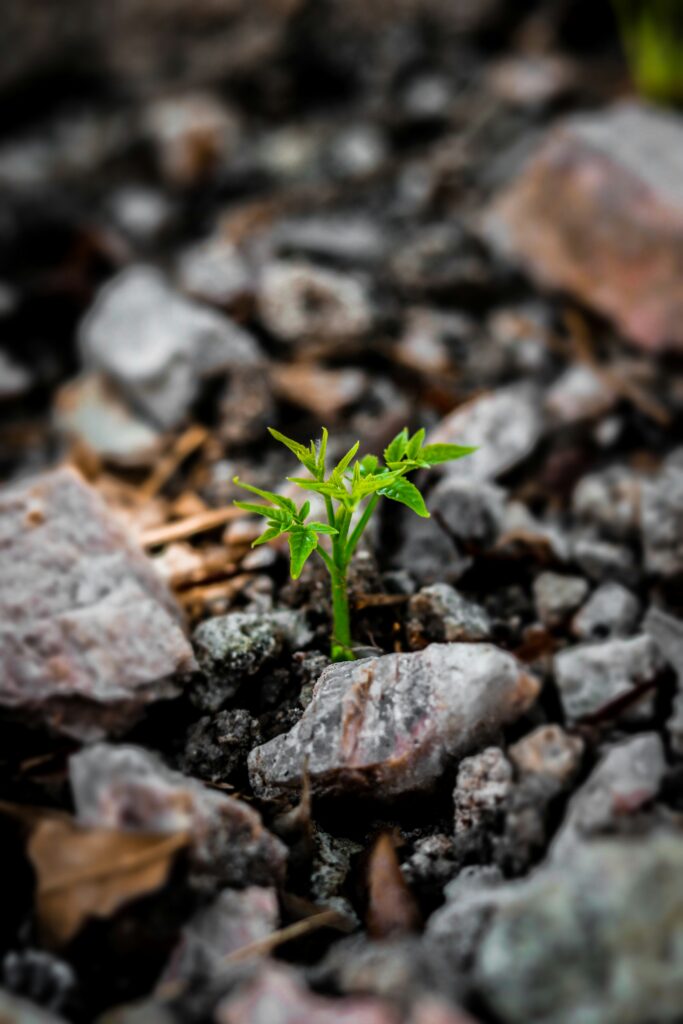
For a long time, I thought emotional growth meant reaching a place where fear simply disappeared.
Now I’m not so sure.
Perhaps growth isn’t silencing the voice that anticipates danger, but rather learning not to hand it the microphone.
Maybe it’s allowing gratitude to speak just as loudly. Maybe it’s accepting that our minds can prepare us for tomorrow without stealing today.
And maybe…just maybe…
The future deserves a chance to surprise us.
What about you?
Do you find yourself expecting the worst, even when life has given you plenty of reasons to hope?
I’d love to hear your thoughts. Perhaps together we can remind one another that while it’s wise to prepare for life’s challenges, it’s equally important to leave room for its unexpected joys.